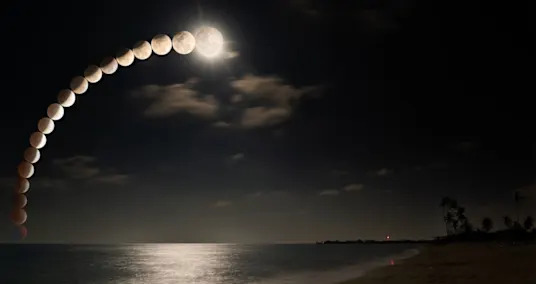
Keep your eyes high in the sky this week to see the last supermoon of the year.
December’s full supermoon, also called the cold moon, will be at its fullest around 6:14 p.m. ET Thursday, according to EarthSky.
“On Thursday, the moon will rise right around sunset time, and that’s why it’s full, because it’s exactly opposite in the sky from where the sun is,” said Noah Petro, project scientist for NASA’s Artemis III mission, which aims to land astronauts near the lunar south pole in 2027.
The moon also will appear full on Wednesday and Friday nights.
This will be the last of three back-to-back supermoons this year. A supermoon happens when the moon reaches perigee, or its nearest point to our planet, making it appear larger and fuller.
The moniker cold moon indicates that it’s the full moon event closest to the winter solstice, the shortest day of the year in the Northern Hemisphere. The solstice, which will occur on December 21, marks the beginning of winter in the hemisphere .
Indigenous tribes have various monikers for December’s full moon. For example, the Cherokee people call it the snow moon while the Abenaki tribe refers to it as the winter maker moon.
“The brightness of these supermoons in the winter, especially when it’s really cold, like it is now, I think can be enhanced because the trees aren’t blocking the light,” Petro said.
Remembering the Apollo missions
December’s full moon occurs close to the anniversaries of the historic Apollo 8 and Apollo 17 missions.
Apollo 8 launched on December 21,1968 , and sent a crew of three astronauts into lunar orbit. The astronauts shared a special holiday message from space on Christmas Eve. Apollo 17, which launched on December 7, 1972, marked the last time astronauts landed on the lunar surface.
December’s full moon also occurs ahead of the launch of Artemis II, anticipated between February and April 2026, which will send a crew of four astronauts on a 10-day journey around the moon.
“I would encourage folks to go out this week, go look at the moon, bask in its glory. Think back to what we did in 1968 and 1972 with Apollo 8 and Apollo 17, and then turn the corner and say, hey, we’re just maybe two full moons away from sending humans back to fly past the moon and get a close-up view of the lunar surface from Artemis II,” Petro said .
Upcoming celestial events
Here are the peak dates of the final two meteor showers of the year, according to the American Meteor Society and EarthSky.
Geminids: December 13-14
Ursids: December 21-22
For more CNN news and newsletters create an account at CNN.com
LATEST POSTS
- 1
 A photographer's journey to capture a blood moon rising over the South China Sea. 'It was an incredible moment'
 - 2Common ADHD medication prescribed in childhood may protect against risk of psychosis
- 3From Novice to Master: Dominating a Side interest
- 4'Seditious behavior': Trump accuses Democrats who made video reminding the military not to follow illegal orders of a crime — but is it?
- 5The Solution to Ecological Protection: Saving Nature for People in the future


- SF Chinatown's historic Empress of China building being revived into cultural campus
- Arrow Exploration brings new Colombian oil well on stream ahead of schedule and under budget
- A Manual for Well known Western television Series
- Which camera do you believe is great for first-time clients? !
- The most effective method to Shake Hands Expertly: A Bit by bit Guide
- 6 Methods for further developing Rest Quality
- As infant botulism cases climb to 31, recalled ByHeart baby formula is still on some store shelves
- How Skoda Lost Its Biggest Market In Just Seven Years
- Greenland’s melting ice and landslide-prone fjords make the oil and minerals Trump is eyeing dangerous to extract